
Wind, waves and water, measured every hour.
Offshore met-ocean data usually comes from a passing survey or a single buoy. Overwatch turns the structure into a permanent, unmanned monitoring station.
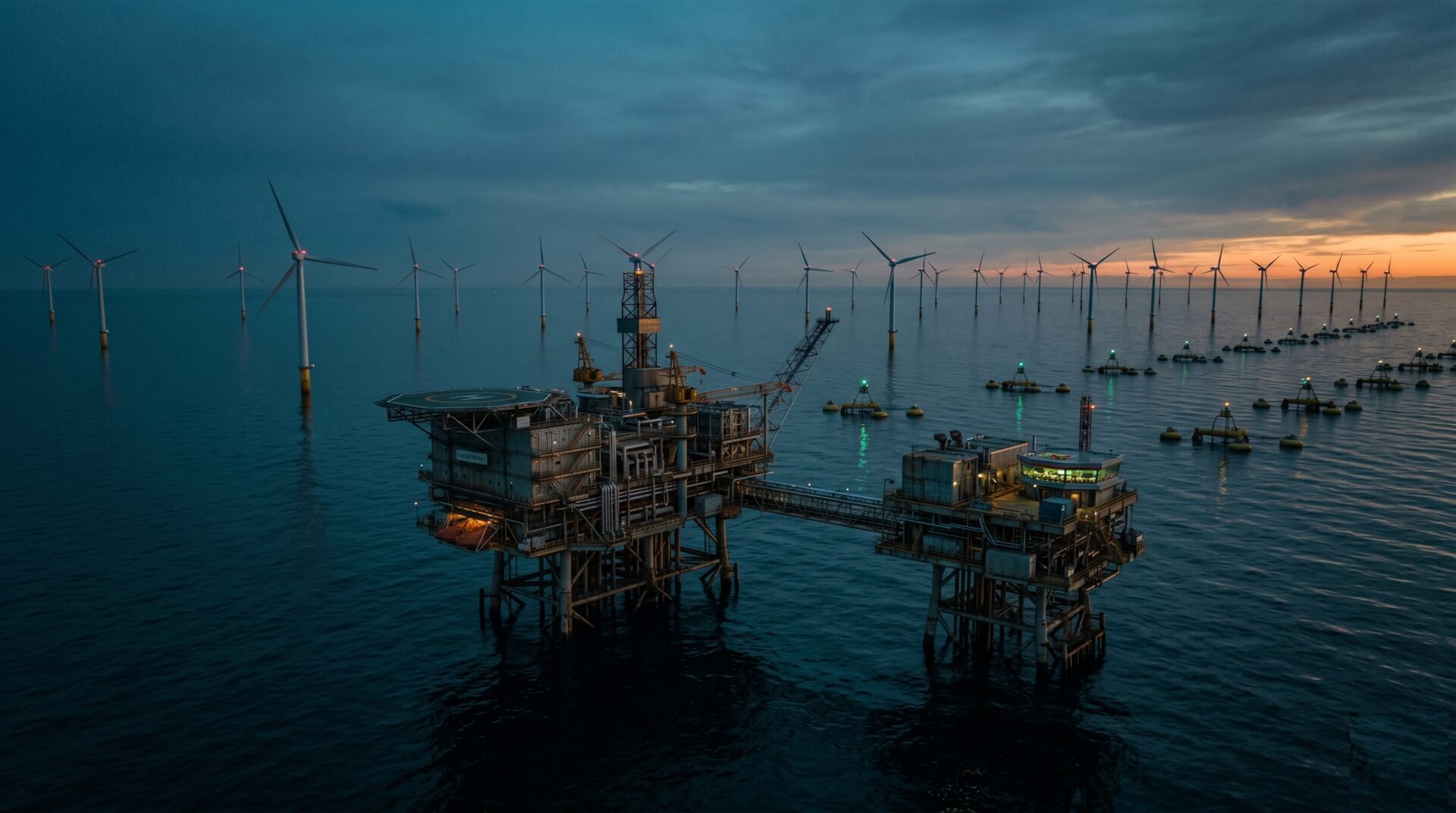
Weather above, sea state at the surface, water column below.
The structure becomes the sensor.
A platform or turbine foundation already has power, deck space and a fixed position. Overwatch mounts on it to watch the weather above, the sea surface and the water column below, with no crew aboard.
The solar-powered, satellite-connected node runs AI on the structure. Operations gets a live met-ocean picture and no added maintenance load.
Met-ocean, top to bottom.
One node covers the air, the surface and the subsea.
Weather & air movement
Wind speed and direction, gusts, temperature, pressure and humidity.
Wave, current & sea state
Wave height and period, swell direction and surface current, logged continuously.
Underwater & subsea
Current profiling, structural and scour monitoring, and acoustic sensing around the foundation.
Structural integrity, fully remote
Strain, tilt, vibration and corrosion, monitored from shore.
Platforms and wind farms alike.
One live environmental picture for the whole field.
Offshore wind farms
Wind, wave and current data for turbine operations, power forecasting and maintenance planning.
Repurposed & active platforms
Turn any platform into a met-ocean station without putting a crew offshore.
Marine environment & compliance
Subsea acoustic and marine-life data for permits and ESG reports.
Safety & operating windows
Live wind and sea state set the safe windows for crew transfers and vessel work.
Built for offshore duty.
Self-powered, connected and secure, far from shore.
Autonomous power
Solar power with storage for months of unattended operation.
Satellite-connected
Satellite uplink with multi-link failover, anywhere on the water.
One console
Offshore structures on the same live map as the rest of your network.
Put a permanent watch offshore.
If your met-ocean picture still depends on surveys and single buoys, let's scope an autonomous deployment.