
A sensor node that floats.
A solar-powered, satellite-connected node that sits on the water, watches it, and launches surface and sub-surface drones. It carries the Overwatch network past the shoreline.
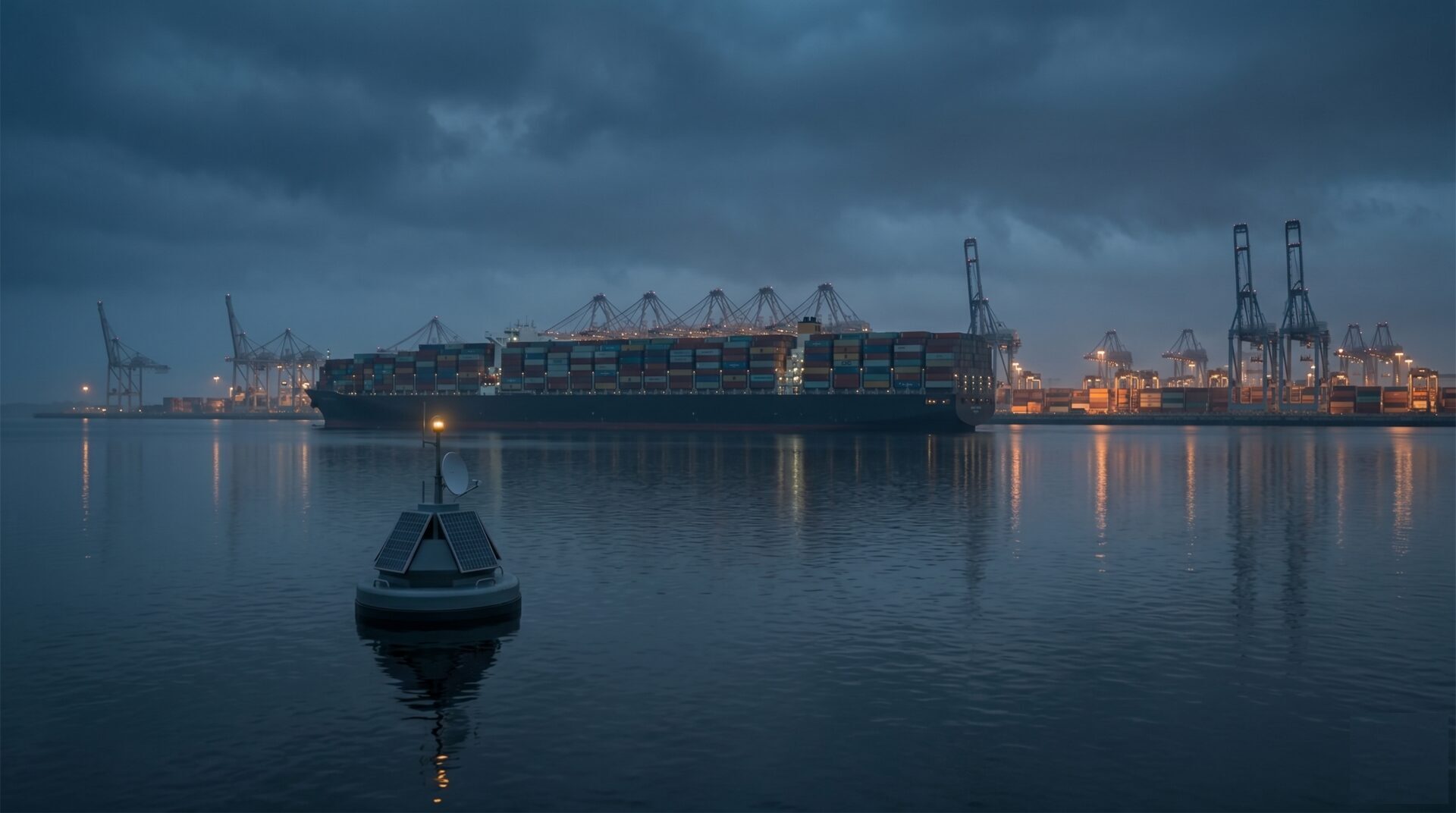
Container-terminal scale, watched from the waterline.
A field node on a hull.
Port approaches and anchorages are watched by radar sweeps and patrol boats, with long gaps in between. The smart buoy stays on station and closes those gaps.
It is an Overwatch field node in a marine hull, with edge AI and a drone dock. It reports to the same console as your land-side nodes.
One hull. Three jobs.
Built to run unattended for months at a time.
Surface-drone capability
A launch and charging dock for autonomous surface vessels used for inspection, escort and response.
Sub-surface-drone capability
Launches and recovers underwater drones for hull, seabed and infrastructure inspection.
Multi-modal monitoring
Vessel detection, AIS correlation, sonar, water quality and weather, combined on board into single events.
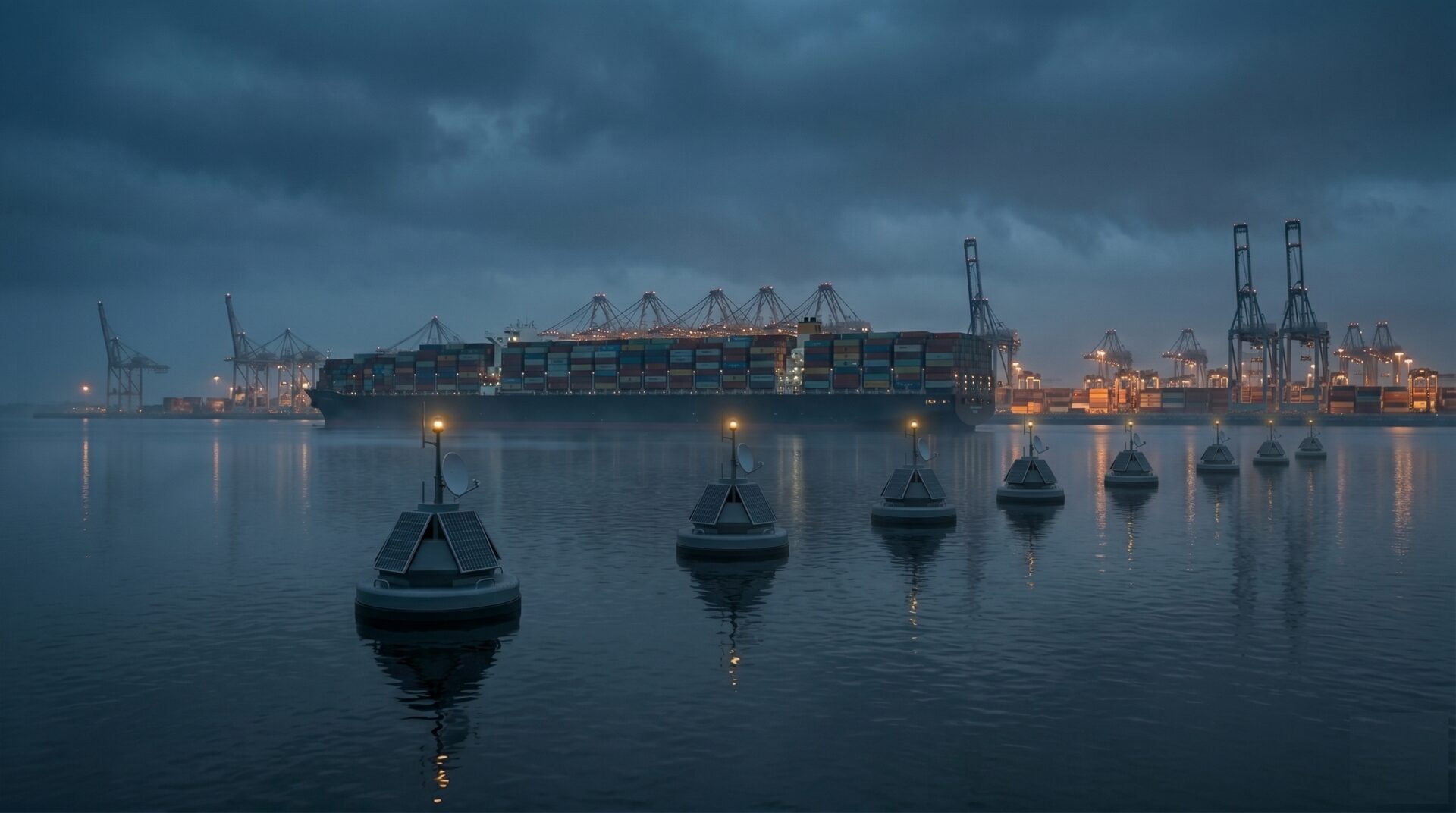
The network doesn't stop at the quay.
A seaward perimeter for the port.
Several buoys form a sensing line across approaches, anchorages and channels, on the same live map as your land-side deployment.
Approach & perimeter awareness
Continuous detection of vessels and small craft. Radar and patrols only cover part of the time.
Anchorage & channel monitoring
Drift, incursion and dark vessels, with AIS checked against what the sensors see.
Sub-surface & infrastructure security
Sonar and underwater drones watch hulls, seabed and submerged infrastructure.
Environmental & safety
Water quality, spill detection and weather from the same nodes.
Built to run unattended.
Indicative characteristics. Each unit is configured to the deployment.
Take the network past the shoreline.
If your coverage stops at the water's edge, let's scope a deployment.